The doorway as a boundary
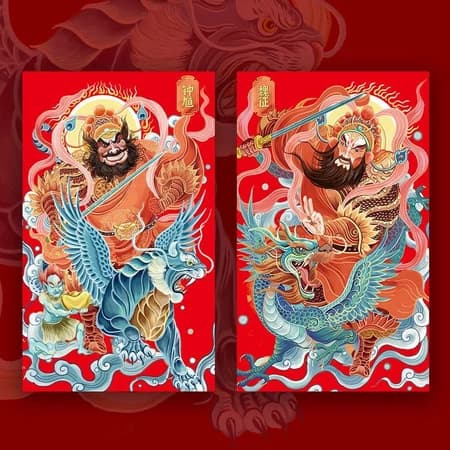
Doorways are symbolic borders between the family interior and the outside world. Protective images placed near doors help mark that border, and Zhong Kui is especially suitable because his image is meant to frighten away disruptive spirits while preserving peace inside.
A Tang court gift
The custom is old. In the Tang dynasty the court gave officials a Zhong Kui painting and a new calendar toward the end of the year; Zhang Yue (667–730) and Liu Yuxi (772–842) both wrote memorials of thanks for them, and a Dunhuang manuscript preserves a New Year's Eve invocation to Zhong Kui for the Nuo ritual of expelling evil (Wikipedia). The Smithsonian's essay on Zhong Kui and the Lunar New Year traces how this seasonal image reached households.
Song woodblock prints
Shen Kuo records that in 1072 Emperor Shenzong of the Song had the Wu Daozi image copied and carved for printing, and that an official delivered prints to ministers of the two chief government offices on New Year's Eve (Wikisource text). Woodblock printing made such pictures easy to reproduce and share.
Homes, shops, and a clean start
Zhong Kui was honored at the New Year, at house-warmings, shop openings and temple fairs (Wikipedia), and Chinese Wikipedia adds that the Ming palace hung his picture on New Year's Eve (Chinese Wikipedia). The custom is not only about fear of ghosts; it also expresses a wish for order, prosperity, and a clean start to the year. See how the image later moved to a second season in the Dragon Boat Festival.
Further reading
Pages we consulted for this guide, each linked where it is used above. Check them if you want to go deeper or verify a detail.